NukeWorker Menu

Employers

Employer Login Help & FAQ Prices Testimonials Info Kit Resume Summary Post Jobs Search Resumes Employer Register

Job Seekers

Jobseeker Login Post Resume Search Jobs Job Seeker Register

Advertising

Banner Ads Lodging Post Jobs Info Kit

Other Services

Outage Schedules Gold Member Study Guides Upload Picture View Pictures Calendar Quiz Help Search for User

Nuclear Pictures

NukeWorker online photo album.

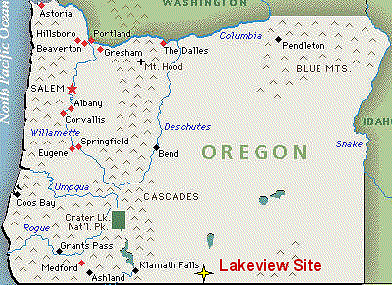
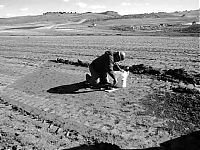
The Lakeview mill site is located about one mile northwest of the City of Lakeview in Lake County, Oregon, and immediately west of U.S. 395. It is in a broad valley north of Goose Lake.
Uranium deposits were discovered in south-central Oregon in the mid 1950s within the Basin and Range geological province. The deposits appear to be remnants of what possibly were once more extensive mineralized zones in essentially flat-lying host rock strata. The deposits possibly were formed by low temperature/low pressure hydrothermal action in an intensely altered tuffaceous host rock capped by a nonporous clay layer. The host rock occurs in a thick sequence of pyroclastic rocks, volcanic sediments, and lake-bed sediments interspersed with andesitic volcanic flows of Pliocene-age. Individual ore deposits are up to 150 feet in thickness, and ore was explored to a depth of 600 feet below the surface. Shallow ore consists principally of secondary uranium minerals and the deeper ore of coffinite associated with base-metal sulfide minerals. Steeply dipping and cross-cutting normal faults have cut the ore-bearing Pliocene sequence into large blocks that are displaced and tilted.
Keywords: Lakeview UMTRA

The Lakeview mill site is located about one mile northwest of the City of Lakeview in Lake County, Oregon, and immediately west of U.S. 395. It is in a broad valley north of Goose Lake.

Uranium deposits were discovered in south-central Oregon in the mid 1950s within the Basin and Range geological province. The deposits appear to be remnants of what possibly were once more extensive mineralized zones in essentially flat-lying host rock strata. The deposits possibly were formed by low temperature/low pressure hydrothermal action in an intensely altered tuffaceous host rock capped by a nonporous clay layer. The host rock occurs in a thick sequence of pyroclastic rocks, volcanic sediments, and lake-bed sediments interspersed with andesitic volcanic flows of Pliocene-age. Individual ore deposits are up to 150 feet in thickness, and ore was explored to a depth of 600 feet below the surface. Shallow ore consists principally of secondary uranium minerals and the deeper ore of coffinite associated with base-metal sulfide minerals. Steeply dipping and cross-cutting normal faults have cut the ore-bearing Pliocene sequence into large blocks that are displaced and tilted.

2002686.jpg 2002687.jpg lakeview.gif quality.jpg gunnison.gif
File information
Filename:lakeview.gif
Album name:Rennhack / Lakeview Mill
Keywords:Lakeview / UMTRA
Filesize:51 KiB
Date added:Jan 24, 2006
Dimensions:392 x 287 pixels
Displayed:2762 times
URL:https://www.nukeworker.com/pictures/displayimage.php?pid=4586
Favorites:Add to Favorites