

?
Composite Operational Excellence Score (0-100) — average percentile rank across 7 dimensions in three sub-scores: Reliability (capacity factor, forced outage days, B2B avg streak), Efficiency (fuel utilization, refuel duration), and Discipline (startup duration, scram count). 5-year window. Higher = more operationally excellent. Click to see the full breakdown.
Excellence
ranked of 93
Subscribers
?
Current reactor power level from the most recent NRC daily report.
100%
Power
ONLINE
?
Days of continuous operation since the last outage ended. Ranked against all operating units.
169
Current Run
days
#52 of 95
Mid Quartile
?
Longest recorded period of continuous operation between outages.
537
Record Run
days
#76 of 95
Bottom Quartile
?
Breaker-to-Breaker runs — continuous operation exceeding the cycle-adjusted threshold (455 days for this 18-month cycle unit) with no trips to 0% power.
13
B2B Runs
#3 of 87
Top Quartile
?
Lifetime capacity factor: average power level across all recorded days (100% = always at full power). Ranked against all NRC-tracked units.
91.9%
Capacity Factor
#26 of 95
Mid Quartile
?
Net electricity actually generated over the most recent 12 months reported by the U.S. Energy Information Administration (Form EIA-923), summed across every unit at this plant. These are authoritative actuals, not an estimate.
18.27 TWh
Net Generation
EIA-923 · 12 mo to 2026-06 · plant total
?
Community rating score (Bayesian-adjusted). Based on 29 votes. Ranked against all rated facilities.
58.6
Rating
29 votes
#18 of 97
Top Quartile
?
Total NRC-reported scram events (emergency reactor shutdowns). Ranked fleet-wide — fewer scrams = better rank.
3
Scrams
#13 of 94
Top Quartile
?
Years since commercial operation began. License remaining: 17.2 years.
40.1
Operating Age
years
17.2 yrs remaining
Reactor Status Timeline
Online NRC data, Mon to Fri ? Actual daily reactor status from NRC reports (Mon to Fri) and the current state. What is coming -- the utility's published Scheduled outage and NukeWorker's model Projection -- is part of a subscription. Colored by status. How far ahead you can see depends on your plan.OnlinePower AscensionRefueling OutageForced Outage
Estimated reactivity remaining in Catawba 2's current fuel cycle, shown as a stylized fuel rod that drains as the cycle progresses. The cycle starts when the unit returns to power after its most recent refueling outage, and the gauge represents the fraction of that cycle's typical effective full-power days (EFPD) still available. Days at less than 100% power burn fuel proportionally — so a unit with significant downtime (high burn deficit) drains slower and ends with MORE reactivity left, giving operators margin to coast down (extend the cycle by reducing power) instead of refueling on the calendar. The dashed red line near the bottom marks the rough industry coastdown threshold (~15% remaining). Cycle target is the unit's median recent cycle length. Source: NRC daily reactor status reports cross-referenced against scheduled refuel outage history.
Fuel Burn Down Cycle since Oct 5, 2025
Catawba 2 is 360 days into its current fuel cycle with an estimated 32.2% of its fuel left. Its typical cycle runs about 506 days.
Fresh — 100%
Refuel — 0%
32.2% remaining
Mid-cycle
Cycle progress
360 / 506 days
EFPD remaining
163 days
Effective burn
343 EFPD
Burn deficit
16.8 FPD
Catawba 2 is mid-cycle with healthy reactivity. Operators have flexibility to defer or advance the next refuel as needed.
This unit has accumulated 16.8 FPD of unburned fuel from cycle downtime — that's free margin to extend the cycle if operators want.
This unit has accumulated 16.8 FPD of unburned fuel from cycle downtime — that's free margin to extend the cycle if operators want.
Historical Burn-Down (17 completed cycles)
Avg refuel point
1.5% remaining
Avg refuel (3yr)
1.6% remaining
Deepest burn
0.0% (2000-04 → 2001-09)
Most margin
6.7% (2001-10 → 2003-03)
Last 5 cycles at refuel
0%
2018-04
0%
2019-10
4%
2021-05
0%
2022-10
2%
2024-04
~2% coastdown (this unit)
Operational Excellence Score Subscribers
Catawba 2 is rated 0 to 100 on how well it actually runs, scored against every other operating reactor in the US fleet from its own operating record. Subscribers see the score, the three sub-scores behind it, and each of the seven measured inputs.
- This unit's composite score and fleet rank
- Reliability, Efficiency and Discipline sub-scores
- All seven measured inputs, with fleet percentiles
- Rank against comparable units, not just the fleet
- Three-year, five-year and lifetime windows
- Five-year trend, and every other operating US reactor
Included with every outage subscription and with NukeWorker Gold membership. Trading the outage rather than working it? The same record, cut by power market, is on NukeGryd.
Capacity Factor (365-Day)
100%
Current
93.8%
365-Day Avg
#39
of 94 plants
Min: 0%
Max: 100%
24 days <80%
Breaker-to-Breaker Runs 13 runs
Breaker-to-breaker runs measure continuous operation between refueling outages using a cycle-adjusted threshold (90% of cycle length minus RFO duration). An active streak means the unit has been running continuously since the last refueling with no trips to 0% power.
Catawba 2 has logged 13 breaker-to-breaker runs, continuous stretches from one refueling to the next with no trip to zero power. Its longest ran 536 days, and its runs average 508 days.
536
Best Run (days)
C2R23 (2019-10-09) → C2R24 (2021-03-28)
508
Avg Run (days)
★ 6-run breaker-to-breaker
C2R18 → C2R19 → C2R20 → C2R21 → C2R22 → C2R23 → C2R24
All Runs
| 2022-10-25 | 2024-03-17 | 509 days | C2R25 → C2R26 |
| 2019-10-09 | 2021-03-28 | 536 days | C2R23 → C2R24 |
| 2018-04-14 | 2019-09-15 | 519 days | C2R22 → C2R23 |
| 2016-10-09 | 2018-03-17 | 524 days | C2R21 → C2R22 |
| 2015-04-01 | 2016-09-10 | 528 days | C2R20 → C2R21 |
| 2013-10-18 | 2015-02-28 | 498 days | C2R19 → C2R20 |
| 2012-04-18 | 2013-09-14 | 514 days | C2R18 → C2R19 |
| 2009-04-19 | 2010-09-18 | 517 days | C2R16 → C2R17 |
| 2007-11-15 | 2009-03-07 | 478 days | C2R15 → C2R16 |
| 2006-05-27 | 2007-09-15 | 476 days | C2R14 → C2R15 |
| 2004-10-30 | 2006-03-19 | 505 days | C2R13 → C2R14 |
| 2003-03-27 | 2004-09-12 | 535 days | C2R12 → C2R13 |
| 2000-06-08 | 2001-09-15 | 464 days | C2R10 → C2R11 |
Scram History 3 events since 2011
Automatic and manual reactor scram (emergency shutdown) events reported to the NRC since 2011. Includes event dates, trip type, and average recovery time. Click the title to view the full fleet scram dashboard.
Catawba 2 has recorded 3 reactor scrams, or emergency shutdowns, since 2011 (0 automatic, 3 manual). On average the unit was back to full power about 7 days after each trip.
Outage Duration Trend
?Scheduled refueling outage durations over time. Green bars are below average, yellow near average, red above. Dashed line shows the plant's historical average. Shorter outages mean better execution.
Catawba 2 has completed 18 scheduled refueling outages on record, averaging 35 days each. The most recent, in Sep 2025, ran 32 days.
Power History (12-Month)
?Daily power output as a percentage of rated capacity over the past 365 days. Green segments indicate full power (90%+), yellow shows reduced output, and red indicates significant power reductions or shutdowns.
Over the past 12 months Catawba 2 has run at an average of 93.8% of rated power. On the chart, green stretches are full-power running and dips toward zero mark reduced output or outages.
Outage Days by Year
?Total days spent in outage each year, split by scheduled refueling (blue) and forced/unplanned (red). Lower totals indicate better reliability and outage execution. Hover for details.
Across its recorded history, Catawba 2 has spent 631 days in scheduled refueling outages and 90 days in forced or unplanned outages. Taller bars mark the years with the most downtime.
Facility Statistics
Key performance and lifecycle metrics calculated from NRC operational data. Includes operating age, construction timeline, capacity factor, efficiency, generation totals, and reliability records.
Catawba 2 has operated for about 40.1 years and averaged a 91.9% lifetime capacity factor, generating roughly 258.0 TWh of electricity. Its longest unbroken run reached 537 days.
Lifecycle & Tenure
Operating Age: 40.1 Yrs
Build Time: 11 Yrs
Lic. Remaining: 17.2 Yrs
Production & Power
Lifetime CF: 91.9%
Efficiency: 33.7%
Generated: 258.0 TWh
Reliability & Outages
Record Run: 537 Days
Refuelings: 18
Avg Startup: 3.6 Days
NukeWorker Member Ratings 29 votes
Community ratings from NukeWorker members. Vote to share your experience working at this facility. Score uses a Bayesian average that accounts for vote count — facilities with few votes are pulled toward the fleet average, so rankings reflect confidence, not just raw percentages.
Above Average
16 (55%)
Average
6 (20%)
Below Average
7 (24%)
Facility Map
Interactive satellite map showing the facility's geographic location. Marker color indicates current status: green for online, red for offline, orange for reduced power. Click the header to open in Google Maps satellite view.
35.0528, -81.0717
Location & Contact
Physical address, phone number, and website for this facility. Use the directions link to get driving directions via Google Maps.
Phone:
(803) 831-3000
Website:
http://www.duke-energy.com/
Per Diem Rates FY 2026
Per diem covers lodging and meals & incidental expenses (M&IE) for government and contractor travel near this facility. Rates are from GSA for FY 2026.
$110
Lodging/Night
$68
M&IE/Day
$178
Total/Day
Standard Rate, SC
Unemployment Benefits SC
Maximum state unemployment insurance benefits for SC. Actual benefits depend on your earnings history and may be lower than the maximum. Data as of Jan 2026.
$326
Max Weekly
20
Max Weeks
$6,520
Max Total
7-day waiting period before benefits begin
Jobs at Catawba 1 active
Active job listings posted for this specific facility on the NukeWorker job board. Click a job title for details, or the header to see them all.
More Jobs in SC 80 active
Active nuclear industry job listings in SC from the NukeWorker job board. Click a job title for full details, or click the header to search all jobs in this state.
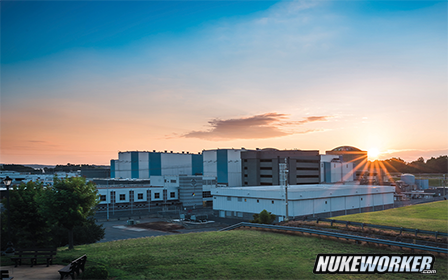
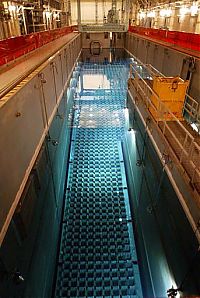
Photos
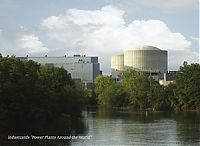
Photos of this facility from the NukeWorker photo gallery. Click the header or any photo to browse the full album.


Ownership & Construction
The utility or company that owns and operates the facility, the architect-engineer responsible for plant design, and the primary construction contractor. Click names to view all facilities by that entity on the map.
DUK
Duke Energy Corporation
NYSE
$114.26
▲ +0.05 (+0.04%)
Previous Close
114.21
Day's Range
113.90 – 115.03
52-Week Range
112.40 – 134.49
Volume
2,704,656
Delayed quote as of Sep 30, 2026 3:53 PM ET.
Source: Yahoo Finance.
Full quote on Yahoo Finance
Technical Specs
Reactor design specifications including type (PWR/BWR), containment design, nuclear steam supply system manufacturer, thermal and electrical power ratings, and current operational status.
Reactor Type:
PWR
Containment:
PWR-ICECND
NSS Supplier:
WEST 4LP
Thermal Power:
3411 MWt
Net Capacity:
1150 MWe
Efficiency:
33.7%
Status:
Operating
Licensing
NRC licensing history including docket number, license type and number, construction permit date, operating license issuance, commercial operation date, license renewal, and expiration date.
Docket #:
05000414
License #:
NPF-52
License Type:
OL-FP
Const. Permit:
1975-08-07
Operating Lic:
1986-05-15
Commercial Op:
1986-08-19
License Renewed:
2003-12-05
License Exp:
2043-12-05
Market & Region
EIA market and grid-region classifications: NERC reliability region, U.S. Census region, balancing authority responsible for grid operations, and whether the unit operates as a rate-regulated utility or a competitive merchant generator. Hover any value for the full name.
NERC Region:
SERC
— SERC Reliability Corporation
Census Region:
SAT
— South Atlantic
Balancing Authority:
DUK
— Duke Energy Carolinas
Market Structure:
Regulated
— Rate-regulated utility (cost-of-service pricing)